

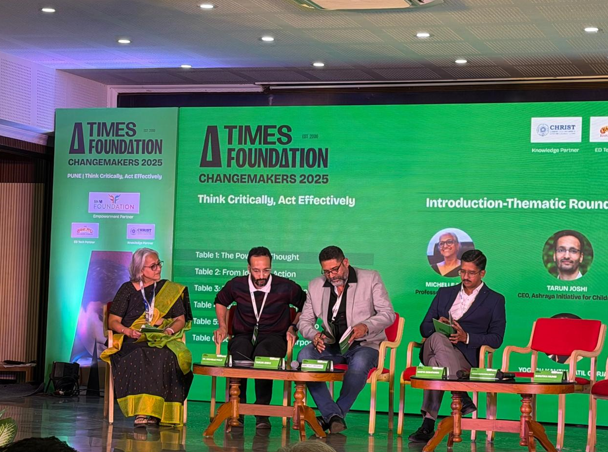
On 7th January 2026, I had the privilege of being invited to the Times Foundation Changemakers Circle 2025, Pune Edition, hosted at Christ University, Lavasa Campus. The forum brought together educators, industry leaders, social entrepreneurs, legal experts, and policymakers. All were united by a shared commitment to reflective dialogue and purposeful action.
Designed as an intimate, conversation-led platform, the Changemakers Circle moved beyond keynote speeches to focus on thematic roundtable discussions. Each table explored how ideas, when examined deeply and ethically, can translate into real-world change.
The Power of Thought
I had the opportunity to lead Table 1, “The Power of Thought”, a discussion centred on how thinking itself, its pace, depth, and intention, shapes decision-making, leadership, and societal outcomes.
At the heart of our conversation was a simple but powerful belief. The way we think determines the way we act, and ultimately, the world we create. In an era defined by speed, automation, and constant stimuli, thoughtful reflection often takes a back seat. Yet, it is precisely this capacity for critical and conscious thinking that distinguishes responsible action from reactive behaviour.
Education Beyond Information
One of the key themes that emerged was the role of education in nurturing both intellect and integrity. Education cannot be limited to the transfer of information or technical competence alone. It must also cultivate the ability to question, to pause, and to evaluate intent and consequence.
Referencing Aristotle’s idea that an educated mind is one that can entertain a thought without necessarily accepting it, we discussed how critical thinking empowers individuals to:
- Reflect before reacting
- Question assumptions rather than inherit them
- Make decisions guided by values, not convenience
Such thinking is essential not only in leadership and governance, but also in everyday professional and personal choices.
From Thought to Ethical Action
Another strong thread in the discussion was the connection between thinking and ethics. Ethical action does not begin at the moment of decision. It begins much earlier, at the level of thought. When we think with clarity, empathy, and responsibility, our actions naturally align with the greater good.
Participants shared perspectives from healthcare, law, corporate leadership, social development, and education. These conversations highlighted how unconscious or hurried thinking can lead to exclusion, miscommunication, and long-term harm. Conversely, reflective thinking enables more humane, inclusive, and sustainable outcomes.
Technology, Progress, and Human Judgment
Technology featured prominently in the dialogue, both as an enabler and a challenge. While technological tools have transformed how we work, learn, and communicate, we reflected on the importance of ensuring that human judgment is never replaced by automated decision-making.
Progress, we agreed, should expand human capacity, not diminish responsibility. The ability to think independently, critically, and ethically must remain central, especially as systems become faster and more complex.
Thinking for the Common Good
The discussion also touched upon issues of inclusion, disability, health communication, migration, and social equity. These are areas where decisions made without thoughtful consideration can deeply affect lives.
True change, we concluded, comes from thinking beyond the self. It requires listening with intent, communicating with empathy, and recognising that every choice carries social consequences. Thought, when directed toward the common good, becomes a catalyst for meaningful transformation.
A Closing Reflection
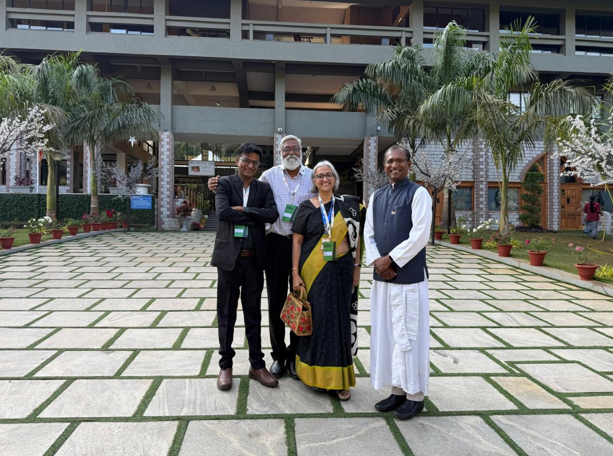
As the Changemakers Circle drew to a close, I shared a final reflection with the group, one that I believe holds relevance far beyond that room:
“Let us leave this space committed to thinking more slowly, more critically, and more consciously, because how we think shapes the world we create.”
In a world that rewards immediacy and constant reaction, choosing to think slowly is a radical act. Choosing to think critically is a responsible one. And choosing to think consciously is an ethical commitment to ourselves, to our institutions, and to society at large.
The Changemakers Circle reaffirmed a belief we strongly uphold at St Pauls College for Women. When education nurtures reflective, values-driven thinkers, it does more than prepare students for careers. It prepares them to shape a more thoughtful, just, and humane world.